
NUCLEAR WASTE
Applying a circular economy approach to nuclear waste
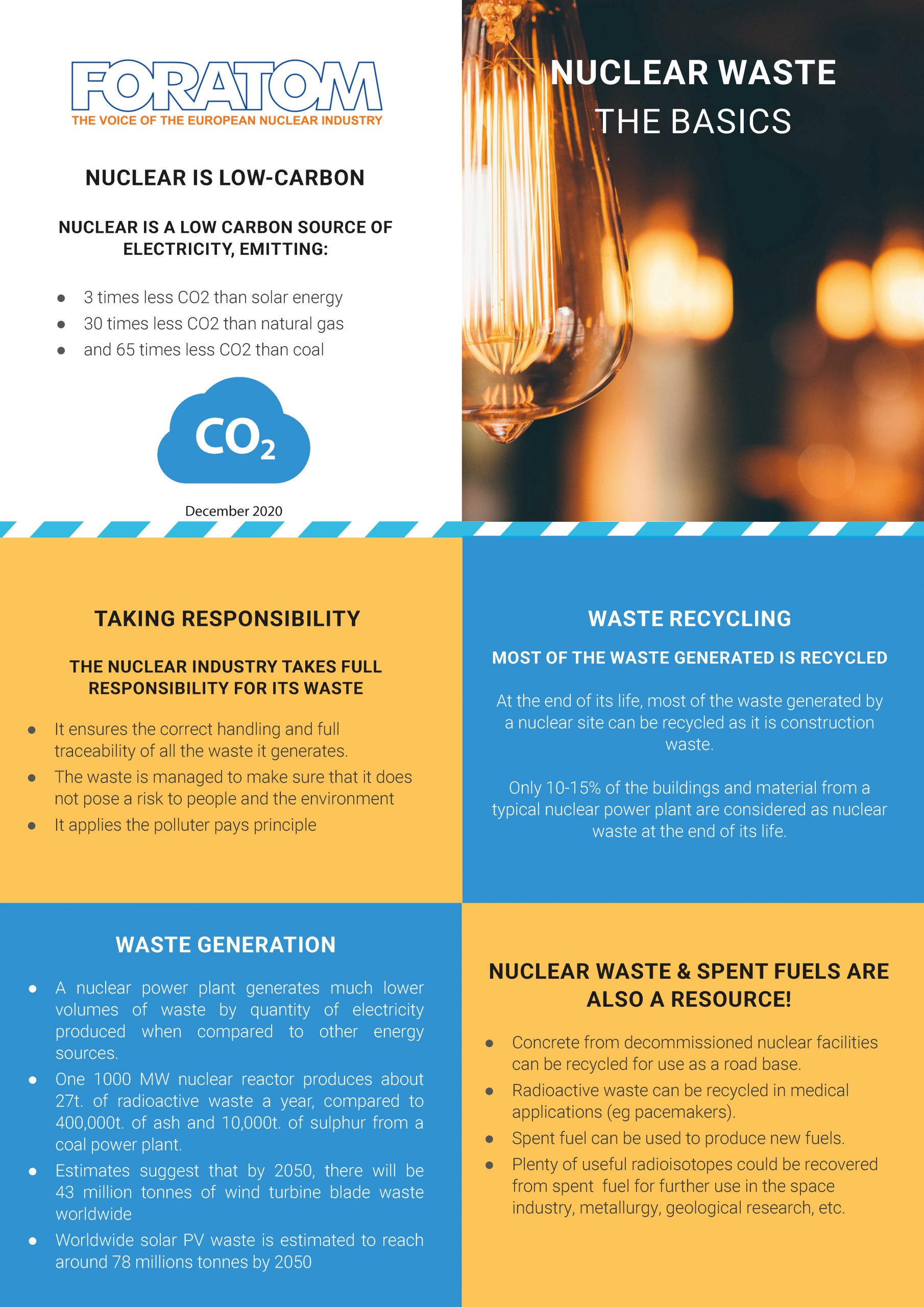
Nuclear technologies provide many benefits to citizens. These include the supply of low-carbon electricity as well as, for example, medical applications used in the diagnosis and treatment of cancer. At the same time, like all industries, nuclear generates waste. For example, construction waste such as the steel and concrete used in a nuclear power plant or the radioactive waste which results from reprocessing spent fuel. Unlike others, the nuclear sector is one of the few industries which takes full responsibility for the handling and traceability of its waste. It also follows the ‘polluter pays’ principle.
As a result, it manages its waste in such a way so as to protect people and the environment.
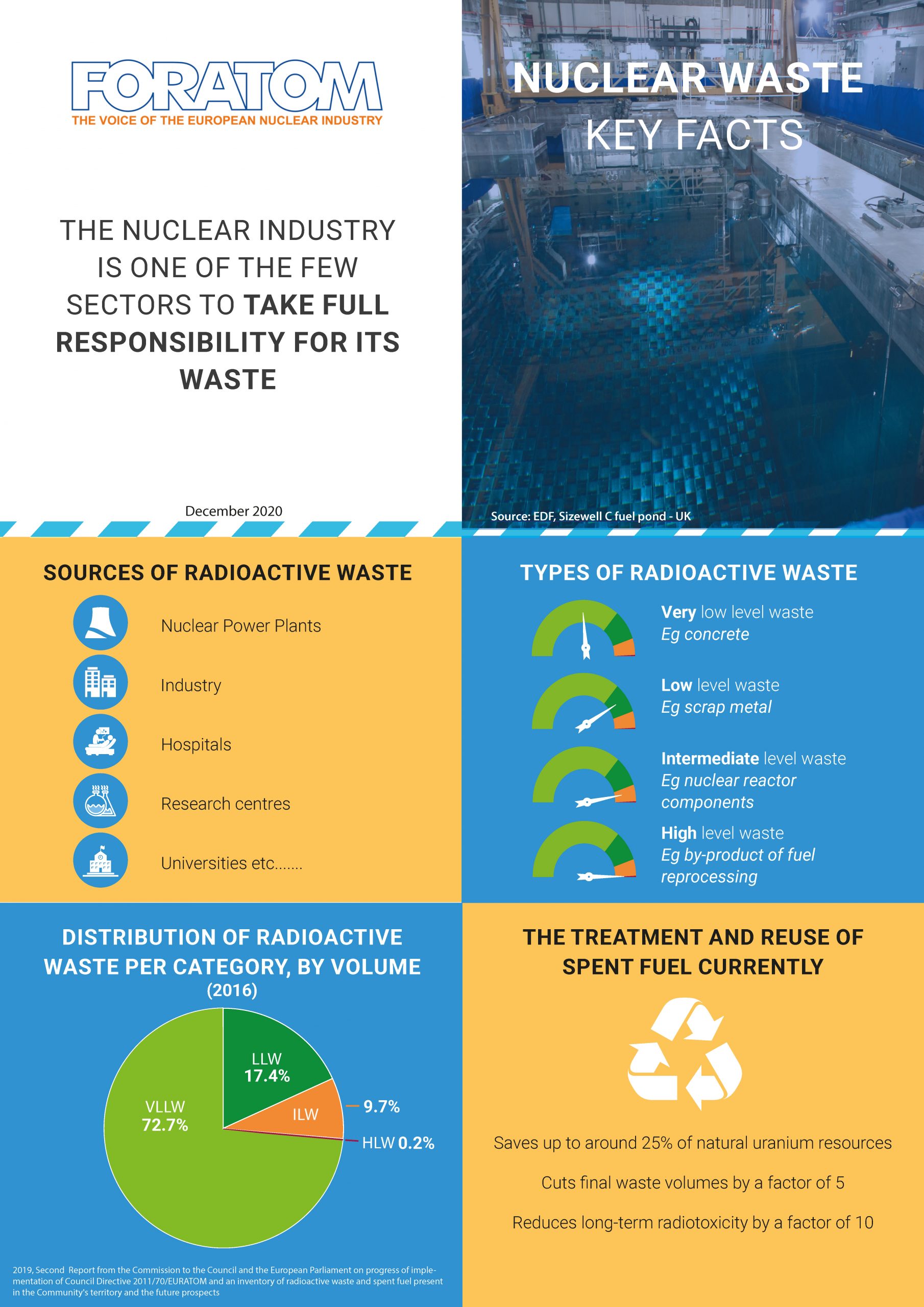
There are four categories of Radioactive waste
The Basics
Key Facts
How does the nuclear industry handle its waste?
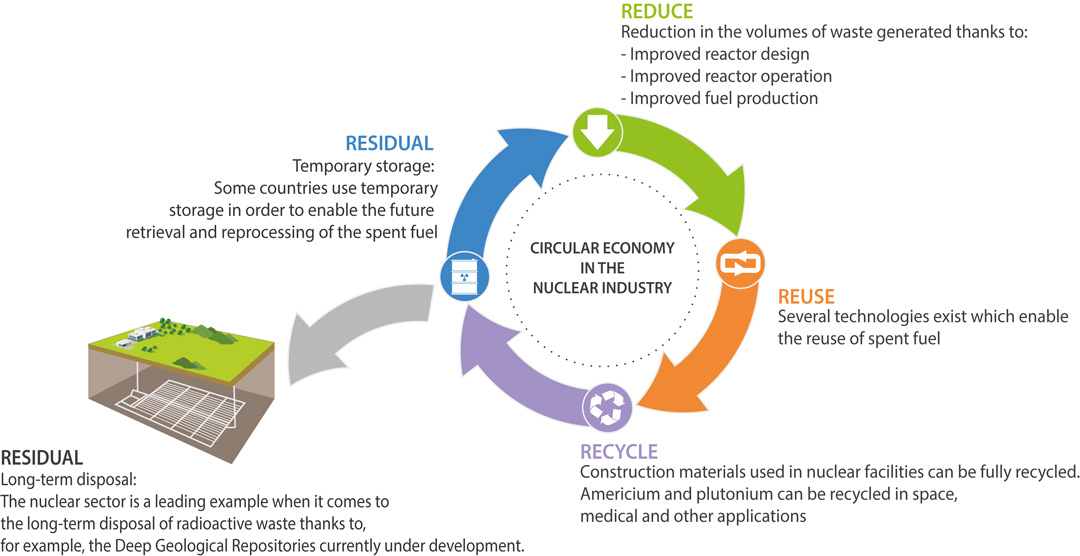
- Several improvements have been implemented in the nuclear lifecycle, leading to a reduction in the volumes of waste generated
- Much of the spent nuclear fuel remains a valuable resource for the nuclear industry and is therefore reused.
- The industry implements well developed waste separation technologies which means that what might otherwise be considered as a waste can in fact be recycled in many different ways.
- Of course, like other industries, a very small percentage of the waste generated does become residual waste, particularly high-level waste. But even here, the nuclear sector is a leading example when it comes to handling such waste.
Find out more!

Background papers on radioactive waste management and decommissioning activities
The nuclear sector already applies a circular economy approach in order to reduce the volumes of waste generated, to reuse and recycle as much as possible and to correctly manage any residual waste, as highlighted in our waste toolkit. These four papers aim to provide more detailed background information on the following:
